Slide Background
13th IGRSM International Conference and Exhibition
on Geospatial & Remote Sensing (IGRSM 2026)
Theme: Geospatial Intelligence for a Sustainable Future
Date: 05-06 August 2026

Venue: Berjaya Time Square, Kuala Lumpur, Malaysia
previous arrow
next arrow
Days
Hours
Minutes
Seconds

Scopus-Indexed Publications

Selected papers will be published in the Scopus-indexed publications of Universiti Putra Malaysia as the Proceedings of the 13th IGRSM Conference 2026.

IGRSM Facebook

IGRSM YouTube

Welcome to
13th IGRSM Conference 2026

We are pleased to warmly welcome all distinguished guests, keynote speakers, paper presenters, delegates, sponsors, and supporters to the 13th IGRSM International Conference and Exhibition on Geospatial & Remote Sensing (IGRSM 2026), which is jointly organized by the Institution of Geospatial and Remote Sensing Malaysia (IGRSM) and its partners and will be held on August 5th and 6th 2026.

We will have a diversity of presenters and audience from the government and private sectors, as well as from academia and research centers, who are here to disseminate knowledge and to share their expertise and experiences in the present and future applications and development of remote sensing, geographical information systems (GIS), global navigation satellite systems (GNSS) and related fields of applications.

We are optimistic you will have a truly fruitful outcome from this conference and we look forward to welcoming you and your colleagues.

13th IGRSM Conference 2026

05-06 AUGUST 2026
Berjaya Times Square Hotel, Kuala Lumpur, Malaysia
"Geospatial Intelligence for a Sustainable Future"

President's Message
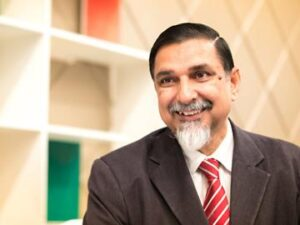
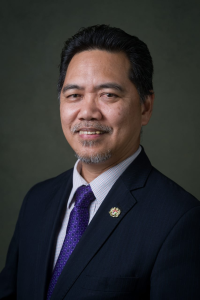
YBhg. Prof. Gs. Dr. Abdul Rashid Mohamed Shariff, President Institution of Geospatial and Remote Sensing Malaysia (IGRSM) ​

Message from the President of The Institution of Geospatial and Remote Sensing Malaysia(IGRSM)​


It is my great pleasure to welcome all delegates, speakers, exhibitors, sponsors, and guests to the 13th IGRSM International Conference and Exhibition on Geospatial & Remote Sensing (IGRSM 2026). The geospatial and remote sensing community is experiencing a period of unprecedented transformation. Advances in artificial intelligence, digital twins, Earth observation technologies, cloud computing, unmanned systems, and geospatial analytics are reshaping how we understand, manage, and interact with our environment. These developments are creating new opportunities to address pressing challenges related to climate resilience, disaster risk reduction, sustainable development, food security, infrastructure planning, and smart governance. IGRSM 2026 provides an important platform for researchers, practitioners, policymakers, industry leaders, and students to exchange knowledge, showcase innovations, and strengthen collaborations across disciplines and borders. Through the sharing of ideas, experiences, and best practices, we can collectively advance the geospatial profession and contribute towards evidence-based decision-making for the benefit of society. This year’s conference programme has been carefully curated to feature high-quality technical presentations, keynote addresses, panel discussions, industry exhibitions, and networking opportunities. I am confident that the interactions and partnerships fostered during this conference will inspire new research, innovation, and collaborative initiatives that will continue well beyond the event itself. On behalf of IGRSM, I would like to express my sincere appreciation to the Organising Committee, sponsors, partners, speakers, exhibitors, and participants for their invaluable support and contributions in making this conference possible. I wish all participants a productive, insightful, and rewarding conference experience. May IGRSM 2026 serve as a catalyst for advancing geospatial science, technology, and applications in Malaysia, the region, and beyond.

Thank you and welcome to IGRSM 2026. ​

Chief Guest
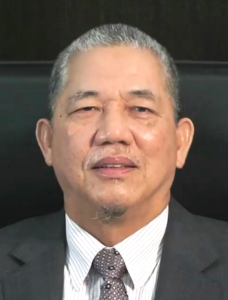
YAB Dato' Sri Haji Fadillah bin Haji Yusof Honorable Deputy Prime Minister and Minister of Energy Transition and Water Transformation ​

YAB Dato’ Sri Haji Fadillah bin Haji Yusof​

Honorable Deputy Prime Minister of Malaysia
and
Minister of Energy Transition and Water Transformation of Malaysia

———————————

YAB Dato’ Sri Haji Fadillah is the current Deputy Prime Minister and Minister of Energy Transition and Water Transformation of Malaysia. He is a member of Parti Pesaka Bumiputera Bersatu (PBB) where he has served as Senior Vice President since 2017. Trained in law, he is the first Sarawakian Deputy Prime Minister and had previously served as Minister of Plantation and Commodities, Minister of Works and Deputy Minister for Science, Technology and Innovation.​

Keynote Speakers

Dato’ Gs. Haji Azlikamil bin Napiah, Director General, Malaysian Space Agency (MYSA)

Dato’ Gs. Haji Azlikamil bin Napiah is the Director General of the Malaysian Space Agency (MYSA), under the Ministry of Science, Technology and Innovation (MOSTI), Malaysia. He has extensive experience in remote sensing, geospatial technologies, and space applications, having served in various leadership roles within Malaysia’s national space and remote sensing agencies. Since the establishment of MYSA in 2019, he has played a key role in advancing Malaysia’s space technology, satellite applications, Earth observation initiatives, and international space collaborations. Under his leadership, MYSA continues to strengthen the nation’s capabilities in space science, technology, and innovation for sustainable national development.

Title of Keynote: VITAL ROLE OF GEOSPATIAL IN THE IMPLEMENTATION OF NATIONAL SPACE POLICY 2030: IN MALAYSIA PERSPECTIVE

Abstract: 

Malaysia has established the National Space Policy 2030 in 2017 to strengthen the implementation of the agenda of developing, expanding, and popularizing all areas of space technology including remote sensing, Geographic Information Systems (GIS),
Global Positioning Systems (GPS), and spatial data analytics to ensure the continuity of prosperity and progress of the country. The policy objectives are; to state the country’s stand and objectives on mastering the space sector; to coordinate the
country’s space activities in an organised manner; to recognise the need for access to space capability; and to determine the direction of development of space sector in Malaysia. Space exploration has produced the space technology and applications
which cover various aspect of people’s live. Space technology is widely used and utilized by society in all aspects of life including communication networks, broadcasting, internet, mapping, navigation for transportation and weather forecasting.
In line with strategic thrusts of the National Space Policy, Malaysia has developed the action plan known as Malaysia Space Exploration 2030 (MSE 2030) to create a comprehensive national space ecosystem. In line with the aspiration for the country to
become a scientific nation for socio-economic transformation and inclusive growth, activities in space technology especially in relation with research, development, commercialisation and innovation continues to be carried out and will enable it to
contribute to economy and wellbeing of the country towards Sustainable Development Goals (SDGs).


Professor, Dr. Wataru Takeuchi, University of Tokyo, Japan

Professor Dr. Wataru Takeuchi is a distinguished Professor at the Institute of Industrial Science, The University of Tokyo, Japan. He is internationally recognized for his expertise in remote sensing, environmental monitoring, disaster assessment, and geospatial technologies. Since joining the University of Tokyo in 2007, he has led pioneering research on satellite-based monitoring of environmental changes, agricultural systems, forests, and natural disasters across Asia. Professor Takeuchi has also served as Senior Policy Analyst for Energy and Environment in the Cabinet Office of Japan and as Director of the JSPS Bangkok Office. His research and leadership have significantly contributed to sustainable development, disaster risk reduction, and environmental management worldwide.

Title of Keynote: Satellite-Based Ground Motion Monitoring for Infrastructure Management: Experience from Japan and Perspectives for Malaysia.

Abstract: Climate change and increasingly frequent extreme weather events are increasing the risk to critical infrastructure. In Malaysia, highway networks such as the North-South Expressway (PLUS) are particularly vulnerable to ground instability associated with heavy rainfall and complex geological conditions. Satellite-based ground motion monitoring can complement conventional inspection methods by providing wide-area observations of surface deformation.

This presentation reviews the application of Interferometric Synthetic Aperture Radar (InSAR), particularly Multi-temporal InSAR (MT-InSAR), for infrastructure monitoring. Operational examples from Japan are presented to illustrate how satellite-derived ground motion information has been used to support infrastructure asset management. The Japan Ground Motion Service (J-GMS) at the University of Tokyo is introduced as an example of an operational platform for large-scale satellite data processing and ground motion monitoring.

Based on these existing technologies and operational experiences, the presentation discusses the potential application of satellite-based ground motion monitoring to infrastructure management in Malaysia. The presentation focuses on established methodologies and publicly available operational practices and does not present new algorithms, processing methods, or proprietary technologies.

Masahiko Nagai, Professor, Graduate School of Sciences and Technology for Innovation, Yamaguchi University

Masahiko Nagai is Professor of Yamaguchi University, Japan who is engaged in space utilization engineering and remote sensing research utilizing satellite data and GIS (Geographic Information Systems). Currently, I serve as the director of the Applied Satellite Remote Sensing Research Center (YUCARS) at Yamaguchi University, where I lead cutting-edge research on improving disaster resilience, smart agriculture, and global environmental monitoring using satellite data. Furthermore, he actively implements research results in society, promoting the industrial use of satellite data and the creation of space businesses originating from regional areas.

Title of Keynote: Integrating Satellite and UAV data with Calibration and AI Technologies
Abstract:

The utilization of constellation satellite, multi-sensor and UAV data is very important for various monitoring tasks, such as disaster and environment. In order to use multiple remote sensing data, it is necessary to conduct with appropriate geometric and radiometric calibration and validation which is required for effective remote sensing data applications.

I would like to introduce our latest research and development for remote sensing data calibration. We have developed optical calibration sites using both natural surface and ground point-source-mirror target. Those calibration site has been constructed by Yamaguchi University and New Space Intelligence Inc. which is the start-up company of Yamaguchi University.

Our calibration sites experimented with several satellite images for the verification of radiometric and geometric performance following the harmonized reflectance product. The top of atmosphere (TOA) radiance and reflectance of optical micro-satellite imageries are simulated by ground surface and atmospheric measurements. The mirror target is used to verify geometric accuracy and better band co-registration. The TOA reflectance derived from the ground measurements and acquired by satellite instruments is correlated to derive harmonization coefficients. The results show an improvement in image accuracy and harmonization of the different sensor data for the multi-temporal application. Furthermore, it can be used for improving radiometric performance and image quality using deblurring from a point spread function (PSF) created from the mirror target.

These calibration technologies will be API-based, implemented as cloud-based systems. Furthermore, these calibration technologies are applicable not only to satellite data but also to images observed from aircraft and HAPS (High Altitude Platform Systems), enabling integrated use with satellite data. 


Berjaya Times Square Hotel

Kuala Lumpur, 1 Jalan Imbi, 55100 Kuala Lumpur, Malaysia

Conference Venue

Berjaya Times Square Hotel

Kuala Lumpur, 1 Jalan Imbi, 55100 Kuala Lumpur, Malaysia

Conference Venue

Important Date

Topic
Date
Abstract Submission Opens
1 January 2026
Abstract Submission Deadline
31 March 2026
Abstract Acceptance Notification
15 April 2026
Full Paper Submission Opens
20 April 2026
Full Paper Submission Deadline
15th May 2026
Final Paper Acceptance Notification
15 June 2026
Early Bird Registration
1st January–30th June 2026
Camera-Ready Paper Deadline
30 July 2026
Regular Registration Opens
1st July 2026
Conference Dates
05–06 August 2026

ORGANISED BY

Event Countdown

05–06 August 2026

Days
Hours
Minutes
Seconds
Share via
Copy link